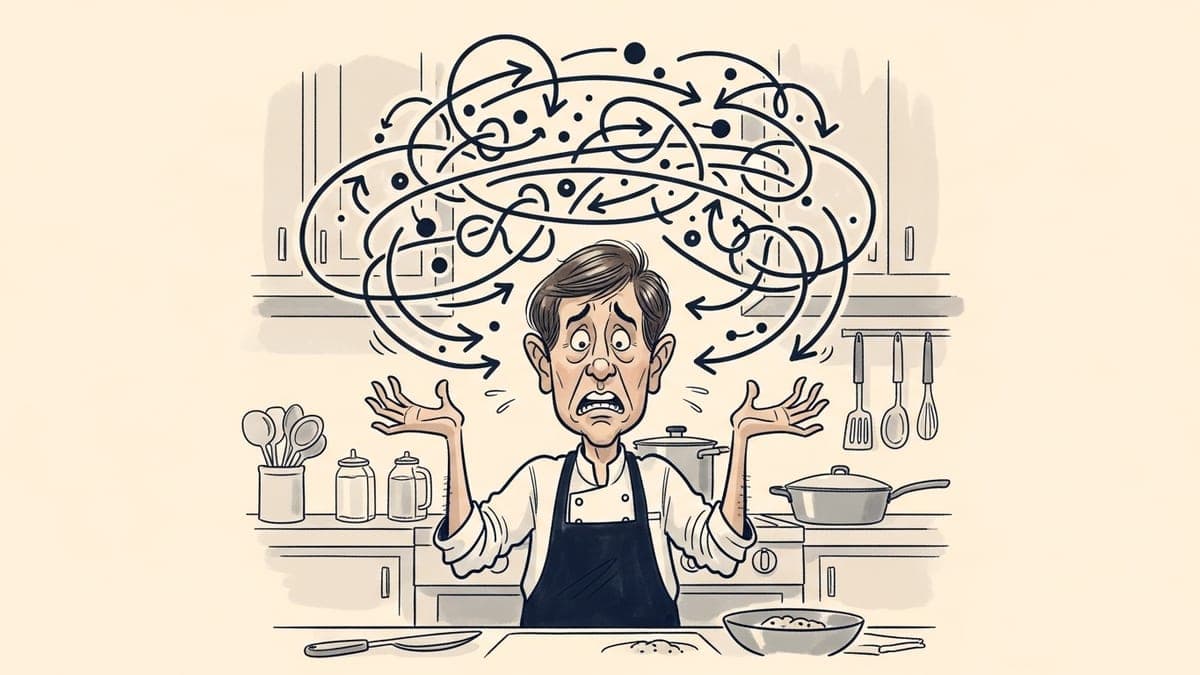
How to Cook Well Using PDCA: A Simple System for Better Meals
Most people think cooking well comes from talent, memory, or a few favorite recipes. In reality, the best home cooks often use a system, even if they do not call it that. They plan the meal, cook it, taste the result, and make one adjustment next time.
The simplest way to cook well using PDCA is to treat every meal like a small improvement cycle: Plan, Do, Check, Act. That approach reduces stress, improves consistency, and helps you get better faster without turning dinner into a project management exercise.
What PDCA Means in Cooking
PDCA stands for Plan, Do, Check, Act. It is a continuous improvement model used in operations, manufacturing, healthcare, and service businesses. In the kitchen, it works the same way: define what you want, cook it, review the outcome, and make one change for the next round.
The power of PDCA is that it replaces vague hope with a repeatable loop. Instead of saying, “I’m bad at cooking,” you say, “My chicken is usually dry, so next time I will lower the heat and pull it earlier.” That shift matters because cooking is not one decision; it is a chain of small decisions.
For busy households in the United States, this is especially useful. Weeknight cooking often happens between work, school pickups, and everything else on the calendar. A simple system beats improvisation when time is tight.
Why PDCA Helps You Cook Better Than Relying on Instinct Alone
Instinct is useful, but it is unreliable when you are tired, distracted, or trying a new dish. PDCA gives you a structure that makes improvement visible. It helps you notice patterns like over-salting, under-seasoning, or cooking too much food for the family.
It also lowers the emotional cost of mistakes. A meal that misses the mark is not a failure; it is data. That is how operators think about process improvement in business, and the same mindset works at home. You do not need to become a chef. You need a feedback loop.
Here is why that matters:
Consistency: You can repeat meals that work.
Speed: You spend less time guessing.
Quality: You improve flavor, texture, and timing over time.
Confidence: You know what to change when something goes wrong.
Plan: Set Up the Meal Before You Start Cooking
The Plan step is where most home cooking wins or losses are decided. Good planning does not mean writing a formal project plan. It means thinking through the meal before you turn on the stove.
Start with the outcome. What does “good” mean for this meal? A fast Tuesday dinner? A healthier version of takeout? A crowd-pleasing dish for guests? The answer changes your choices. A roasted salmon dinner for two needs a different plan than a taco bar for a family of five.
Next, define the constraints. In real life, those constraints are usually time, budget, equipment, and skill level. If you have 30 minutes, a single sheet pan and one skillet are better than a complicated recipe with six steps and three sauces. If you are cooking for kids, you may want familiar flavors and simple textures.
Then gather the inputs. Check what is already in the fridge and pantry. A good home cook does not start from scratch every time. Maybe you already have rice, onions, canned beans, and frozen corn. That is enough to build a solid meal. Planning around what you have reduces waste and keeps the process realistic.
Finally, choose one recipe or meal structure and one success metric. For example: “Make chicken fajitas in 35 minutes, with tender chicken and vegetables that are browned but not mushy.” That gives you a target you can actually evaluate later.
Questions to Ask During the Plan Step
What does success look like for this meal?
How much time do I really have?
What ingredients do I already own?
What is the simplest version of this meal that still tastes good?
What could go wrong, and how will I prevent it?
Do: Cook the Meal Without Overcomplicating It
The Do step is execution. This is where you follow the plan, but not rigidly. In cooking, conditions change. A pan runs hotter than expected. A tomato is more watery than usual. Your child asks for help with homework halfway through sautéing onions. Good execution means staying calm and working the process.
Keep your focus on the critical steps. For example, if you are making roasted vegetables, the important variables are cut size, oil coverage, oven temperature, and spacing on the pan. If you are making pasta, the critical steps are water salting, timing, and finishing the sauce with a little pasta water. You do not need to optimize everything at once.
This is where many cooks make the mistake of adding too much complexity. They change the recipe halfway through, use three extra spices, and then cannot tell what actually worked. In PDCA, the Do step should be disciplined. Follow the plan closely enough that you can learn from the result.
Mini-scenario: You are making burgers on a weeknight. Instead of changing the seasoning, bun, cheese, and sauce all at once, you keep the burger recipe the same and only adjust the cook time. That way, if the burgers are still too dry, you know the issue is heat or timing, not the seasoning blend.
Check: Evaluate What Actually Happened
The Check step is where cooking becomes improvement. After the meal, ask what happened compared with what you expected. Did it taste good? Was the texture right? Did it take longer than planned? Did the family finish it, or did leftovers pile up?
This does not need to be formal, but it does need to be honest. If you say “fine” every time, you will not improve. Instead, use specific observations. “The chicken was flavorful but slightly dry.” “The rice was good, but I started it too late.” “The vegetables were tasty, but the pan was overcrowded.”
Try to separate the recipe from the execution. Sometimes the issue is not your skill; it is the process. Maybe the recipe had too many steps for a school night. Maybe the oven temperature was off. Maybe the ingredient quality was the real problem. Good operators look for root causes, not just symptoms.
Two useful questions make the Check step practical:
What did I expect to happen?
What actually happened, and why?
Mini-scenario: You make a stir-fry and the sauce tastes flat. Instead of blaming yourself, you check the process. Was there enough salt? Acid? Heat? Did you taste before serving? That review tells you whether the fix is more soy sauce, a squeeze of lime, or a better sequence next time.
A Simple Cooking Scorecard You Can Use
Flavor: Too bland, balanced, or too salty?
Texture: Right tenderness, too soft, or too dry?
Timing: On schedule or late?
Effort: Easy, manageable, or too complex?
Act: Make One Improvement for the Next Meal
The Act step is where learning turns into better meals. The key word is one. Do not try to fix everything at once. Pick the highest-impact change and carry it into the next meal.
If the chicken was dry, maybe you marinate it longer or reduce the cook time by two minutes. If the vegetables were bland, maybe you add salt earlier or finish with lemon. If dinner took too long, maybe you prep ingredients in the morning or choose a one-pan format next time.
This is the same logic used in strong operating models: small, repeatable changes compound. You are not trying to redesign your kitchen. You are trying to make the next dinner slightly better than the last one.
Good improvements usually fall into one of these categories:
Ingredient change: swap, add, or remove one item.
Timing change: start earlier, cook less, or rest longer.
Technique change: sear first, salt earlier, or use higher heat.
Workflow change: prep ingredients before turning on the stove.
Over time, those small changes build a personal cooking system that fits your household, budget, and schedule.
A Real-World Example: Using PDCA to Improve a Weeknight Dinner
Let’s say you want to make a better weeknight dinner for your family: lemon garlic chicken, rice, and broccoli. You want it to be fast, healthy, and kid-friendly.
Plan: You decide on a 40-minute meal. You check the pantry and already have rice, garlic, olive oil, and chicken thighs. You choose broccoli because it cooks quickly and works well with lemon.
Do: You start the rice first, season the chicken simply, and roast the broccoli on a separate pan. The meal comes together, but the chicken is a little dry and the broccoli is slightly underseasoned.
Check: You notice the chicken cooked too long because the pan was crowded and the pieces were uneven. The broccoli needed salt before roasting, not just after.
Act: Next time, you cut the chicken into more even pieces, use a larger pan, and toss the broccoli with salt before it goes in the oven. The meal tastes better without becoming more complicated.
That is PDCA in action. No special tools. No culinary school. Just a tighter loop between planning, cooking, reviewing, and improving.
Common Mistakes When Applying PDCA in the Kitchen
PDCA works best when it stays simple. The most common mistake is overplanning. If you spend more time designing the meal than cooking it, the system becomes a burden instead of a help.
Another mistake is changing too many variables at once. If you alter the protein, sauce, cooking method, and pan size in one attempt, you will not know what caused the result. Improvement depends on isolating variables.
A third mistake is skipping the Check step. Many people cook, eat, and move on. That misses the learning opportunity. Even a 30-second review can help: What was good? What was off? What should change next time?
Finally, do not turn PDCA into perfectionism. The goal is not to create flawless meals. The goal is to make cooking easier, more reliable, and more satisfying over time.
How to Build a Personal Cooking System Over Time
If you want to cook well using PDCA, start with one meal you make often. Taco night, pasta, roasted chicken, grain bowls, or breakfast-for-dinner are all good candidates. Repetition is useful because it gives you enough data to improve.
Build a small habit after each meal:
Write one sentence about what worked.
Write one sentence about what to change.
Keep one favorite version of the recipe.
Use the same scorecard each time.
After a few cycles, you will notice something important: your cooking gets better without requiring more effort. That is the real value of PDCA. It turns mealtime from a guessing game into a practical system.
If you want a simple next step, choose one dinner this week and run a full PDCA cycle. Plan it with clear constraints, cook it with discipline, check it honestly, and make one improvement for next time. That small loop is enough to build momentum.
Read more: If you like practical systems that make everyday work easier, look for simple process tools you can reuse at home, not just at work. The best systems are the ones you can actually keep using.
FAQ
What if my meal still turns out badly after using PDCA?
That usually means the next improvement was too small or the wrong variable changed. Go back to the Check step and isolate one likely cause, such as heat, seasoning, or timing. Then adjust only that one thing on the next attempt so you can see the effect clearly.
Can PDCA work for baking too?
Yes, but baking is less forgiving than stovetop cooking, so measurement matters more. Use the same structure, but be stricter about ingredient amounts, oven temperature, and timing. Small changes are best because baking reacts quickly to variation.
How often should I review my cooking results?
Right after the meal is best, while the details are still fresh. You do not need a long review; one or two notes are enough. The goal is to capture what you would forget by tomorrow.
What is the easiest meal to start with?
Choose a meal you already cook often, such as tacos, pasta, stir-fry, or sheet-pan chicken and vegetables. Repeating the same meal makes it easier to see whether your changes helped. Familiar meals also reduce the risk of too many unknowns.
Do I need to write everything down?
No, but a few notes help. A simple note in your phone is enough: what you made, what worked, and what to change next time. Written feedback makes improvement faster because you do not have to rely on memory alone.